Introduction
Have you ever felt stuck—whether in chronic anxiety, persistent symptoms, or a health challenge that refuses to shift? These patterns can feel discouraging, especially when they seem to repeat no matter what you try. But neuroscience offers an empowering truth: your brain is not fixed. It is constantly adapting, learning, and reshaping itself in response to your experiences [1]. This ability, called neuroplasticity, is the foundation of learning, recovery, emotional resilience, and long-term brain health.
In this article, we’ll explore what neuroplasticity is, how scientists discovered it, real-world examples you can practice daily, and how neuroplasticity plays a role in healing chronic symptoms. We’ll also share how structured neuroplasticity programs like re-origin help people create lasting change by rewiring old patterns and building new pathways in the brain.
At re-origin, we’ve helped thousands of people retrain their brains, calm long-standing stress responses, and reconnect with health and well-being. If you want to experience the benefits of neuroplasticity firsthand, you can explore the program here: https://www.re-origin.com/program.
What Is Neuroplasticity?
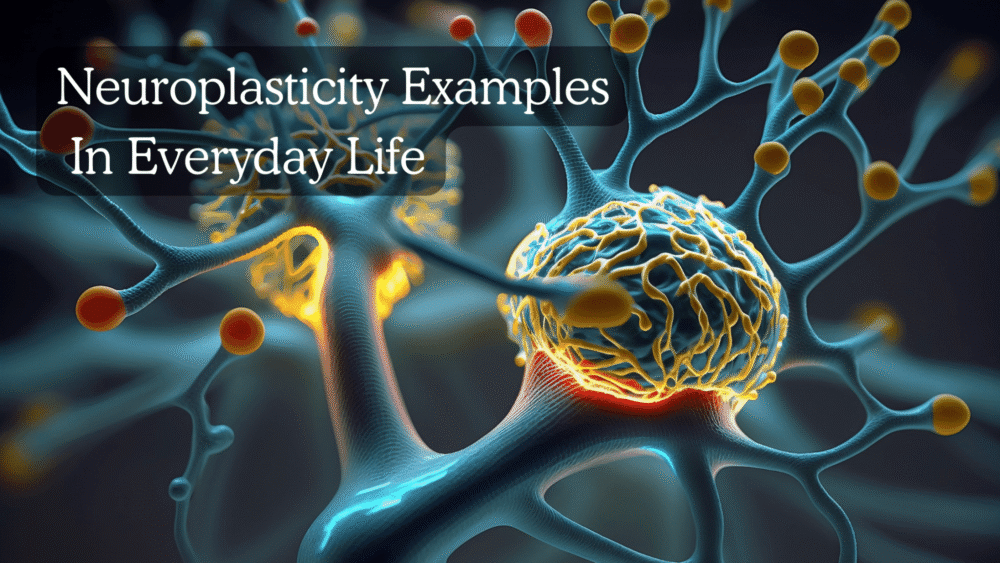
Neuroplasticity—also called brain plasticity—is the brain’s ability to reorganize itself by forming new neural pathways. These changes happen in response to learning, experience, environment, and healing processes [1]. Neurons can strengthen existing pathways, weaken unused ones, or create completely new connections that support behavior change and skill development.
A clear example is stroke recovery. When a stroke damages areas responsible for movement or speech, targeted therapy can help other regions of the brain take over these lost functions. This demonstrates neuroplasticity in action.
A Brief History of Neuroplasticity
Although the term was formally introduced by Jerzy Konorski in 1948, the idea dates back to the late 1800s. Neuroscientist Santiago Ramón y Cajal proposed that neurons could adapt and change throughout life—a revolutionary concept at the time [2]. For decades, scientists believed the brain was fixed after childhood. But modern research shows that new neurons continue to form into adulthood, a process called neurogenesis, and plasticity remains available throughout life.
Types of Neuroplasticity
The brain adapts through both functional and structural changes.
Functional Neuroplasticity
This type involves shifting functions from one brain region to another. It is particularly important in recovery from injury or stroke.
Structural Neuroplasticity
This refers to physical changes in the brain, such as new neuron growth, changes in gray matter, and strengthened or pruned synapses [3]. Long-term behavior change and learning rely heavily on this form of plasticity.
Why Neuroplasticity Matters
Neuroplasticity underlies nearly everything we do like memory, emotional regulation, movement, skill learning, and healing from illness.
It supports:
- Stroke recovery
- Adaptation after brain injury
- Learning disabilities
- Chronic stress and anxiety recovery
- Sensory compensation
- Age-related cognitive resilience
Because plasticity is always active, intentional repetition of healthy patterns strengthens desired pathways.
Neuroplasticity Examples in Everyday Life
You don’t need special tools or conditions to use neuroplasticity. It’s happening daily.
Learning a New Language
Learning a second language strengthens memory, attention, and executive-function networks. It increases gray matter density and supports long-term cognitive health [4].
Navigating New Environments
A famous study of London taxi drivers found they had a larger hippocampus than bus drivers. Navigating complex routes reshaped their neural structure [4].
Learning Music or Practicing Instruments
Musicians show higher levels of neuroplasticity because playing music engages motor, auditory, emotional, and memory systems simultaneously [5].
Physical Activity and Exercise
Exercise increases BDNF, boosts hippocampal growth, and improves cognitive resilience (van Praag et al., 2014)[6].
Intermittent Fasting
Intermittent metabolic switching promotes neuron repair, improves energy regulation, and enhances synaptic adaptability [7].
Using Your Non-Dominant Hand
Simple tasks like brushing your teeth with your non-dominant hand activate new neural circuits and strengthen cross-hemispheric communication.
Clinical and Applied Uses of Neuroplasticity
Healing After Brain Injury
Targeted therapies help reorganize neural networks to support recovery from stroke and traumatic brain injury [8].
Sensory Compensation
Individuals with visual impairments develop enhanced hearing or touch as brain regions reorganize to support sensory compensation [9].
Military and Targeted Neuroplasticity Training
The military uses Targeted Neuroplasticity Training (TNT) to accelerate learning in optimal brain states, improving language learning and pattern recognition [10].
Limbic System Regulation
Chronic stress, trauma, and illness can cause the limbic system to remain overactive—leading to anxiety, physical symptoms, and emotional reactivity.
Neuroplasticity-based practices help retrain these circuits, restore safety signals, and regulate the nervous system.
Explore related conditions:
Applying Neuroplasticity Through Structured Training: re-origin
Neuroplasticity happens naturally, but intentional retraining accelerates meaningful change.
The re-origin program guides individuals through:
- Education on chronic conditions and neural patterns
- Tools to calm anxiety loops
- Techniques to shift out of survival mode
- Step‑by‑step neuroplasticity exercises
- Worksheets, assessments, and guided sessions
- Weekly community coaching and live Q&A
Re-origin helps people rewire maladaptive patterns and build healthier neural responses.
Using the Brain’s Power for Healing and Growth
Neuroplasticity transforms our understanding of what is possible. It shows us that healing, learning, and emotional balance are not fixed traits. With repetition and evidence-based tools, the brain can form new pathways that support long-term well-being.
Learn the science-backed method thousands use to retrain stress patterns and restore resilience.
Helpful Links
- Program Overview
- Conditions Related to Neuroplasticity: